
Importance of Circle Time in Preschool: Why It Matters for Your Child
In a quality preschool, the day is not just about activities; it is about creating routines that help children feel safe, connected, and ready to learn. One of the most important parts of this routine is Circle Time.
The importance of Circle Time in preschool goes far beyond songs and greetings. It is a powerful tool for building social skills and emotional security. Additionally, it fosters language development and classroom readiness. At Time Kids Preschool Anna Nagar, Circle Time is a planned, purposeful part of every morning.
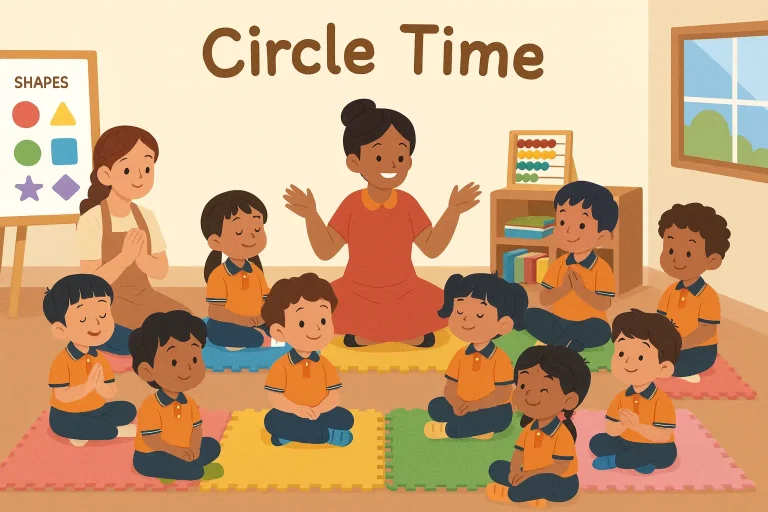
What Is Circle Time in Preschool?
Circle Time is a short, structured group session at the start of the day where children:
✅ Sit together with their teacher and classmates
✅ Greet each other and build a sense of belonging
✅ Talk about the day’s theme, weather, or special events
✅ Sing rhymes, do actions, listen to stories, or play quick games
This simple-looking routine supports a smooth transition from home to school and prepares children for the learning that follows.
Circle Time is a short, structured group session at the start of the day where children:
Key Benefits of Circle Time in Preschool
1. Builds a Sense of Belonging and Security
One of the biggest benefits of Circle Time is that children feel, “I am part of this group.”
During Circle Time, children:
✅ Are greeted by name by their teacher
✅ See and interact with the same friends every day
✅ Experience a familiar, predictable start to the morning
This sense of safety and belonging forms the foundation for confident learning throughout the day.
Why Being on Time for Circle Time Matters
Because Circle Time usually happens at the very beginning of the school day, children who arrive late often miss this crucial part.
When a child arrives after Circle Time has started or finished, they may:
✅ Miss the group greeting and morning routine
✅ Feel a little confused about the plan for the day
✅ Need extra time to settle emotionally
✅ Lose the chance to talk, share, or answer questions in the group
Over time, regularly missing Circle Time can affect a child’s comfort level, confidence, and involvement.
How Parents Can Support Circle Time
Here are simple ways you can help your child enjoy the full benefits of Circle Time:
✅ Plan for timely arrival: Aim to reach a little before the reporting time so your child can settle without hurry.
✅ Talk positively about Circle Time:
“I wonder what song you’ll sing in Circle Time today!”
✅ Maintain a regular sleep routine: A rested child finds it easier to wake up, get ready, and reach school on time.
✅ Ask about Circle Time in the evening:
🔅“What did you do in Circle Time today?”
🔅“Who did you sit next to?”
🔅“Which rhyme did you enjoy?”
These small steps show your child that Circle Time is important and valued both at home and at school.
These small steps show your child that Circle Time is important and valued both at home and at school.
Circle Time at Time Kids Preschool Anna Nagar
At Time Kids Preschool Anna Nagar, Circle Time is:
✅ Warm and welcoming
✅ Age-appropriate and engaging
✅ Designed to balance fun, learning, and emotional connection
Our focus is to ensure every child starts the day feeling:
✅ Seen and heard
✅ Safe and happy
✅ Ready to explore, learn, and grow
With your support in bringing your child on time each morning, we can make Circle Time a powerful and positive start to every school day.
You are also welcome to speak to our teachers at Time Kids Preschool Anna Nagar if you would like to know more about the routine. Importance of Circle Time
1. How long does Circle Time usually last?
In most preschools, Circle Time lasts around 15–20 minutes, depending on children’s age and attention span. It is short, focused, and designed to keep young children engaged.
2. What activities are done during Circle Time?
Common Circle Time activities include:
Greetings and welcome songs
Talking about the day’s theme or weather
Storytelling or picture talks
Rhymes with actions and simple movement games
These activities are planned to support social, emotional, and language development.
3. Is Circle Time suitable for very young children (2–3 years)?
Yes. In our playschool and nursery age groups, Circle Time is kept very simple and playful. Children are not forced to sit perfectly still; they are gently encouraged to join in, in ways that are comfortable for them.
4. How can I know what my child did in Circle Time?
You can ask your child simple, specific questions like:
“Did you sing a song in Circle Time today?”
“Did your teacher show a picture or story?”