
Child Keep Throwing Toys
Have you ever found yourself saying, “Why does my child keep throwing toys?” — right after you’ve picked them up for the tenth time? 😅 You’re not alone, and your toddler isn’t being “naughty.”
In fact, this playful (and sometimes frustrating) habit is a normal part of early childhood development. Every throw, drop, and bounce is your child’s way of exploring how the world works — learning cause and effect, testing boundaries, and discovering emotions.
At Time Kids Preschool, Anna Nagar, we see this behavior every day — and we know it’s more than just mess-making. It’s curiosity in action. Let’s explore why toddlers throw toys and how parents can guide this behavior calmly and positively.
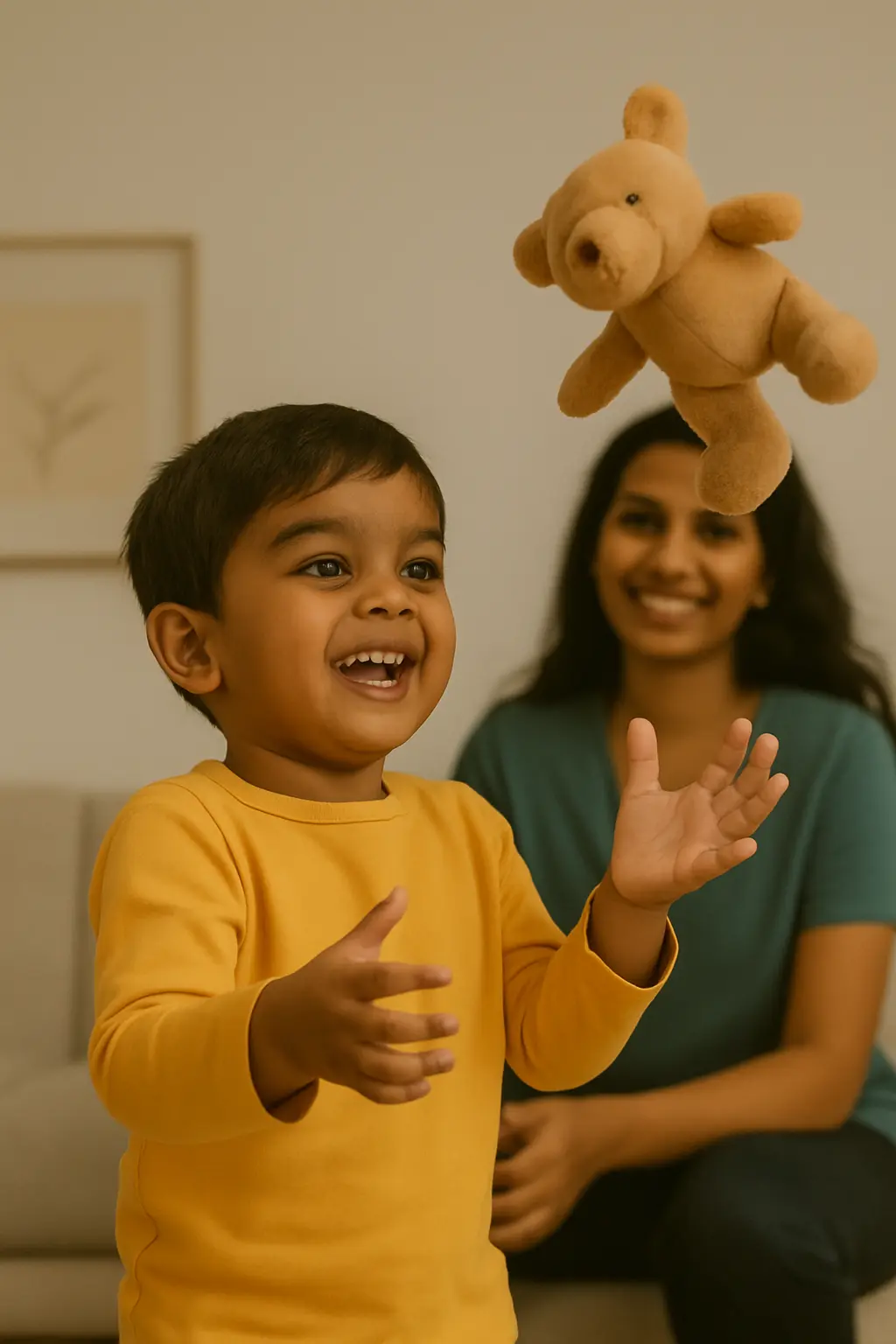
🧠 The Science Behind Throwing
Between 12 to 24 months, children begin exploring how the world works. Throwing is their way of experimenting with cause and effect — what happens when something leaves their hand and hits the ground.
It also supports their motor development and hand–eye coordination. Every toss builds muscle control and body awareness — both essential for writing, catching, and balancing later on.
In short: when your child throws a toy, they’re not misbehaving — they’re learning through movement.
❤️ Emotional Reasons for Throwing
Not all throwing is physical learning — sometimes it’s emotional communication.
Toddlers throw toys when they:
Feel excited or overstimulated.
Want attention from parents.
Feel frustrated (like when a toy doesn’t work as expected).
Need a break or redirection.
Understanding the why helps you guide their behavior without anger or punishment.
👩👧 How Parents Can Respond Calmly
When toddlers throw, they’re exploring cause & effect, emotions, and control. Guide with consistency and warmth using the five strategies below.
Stay Calm
Scolding doesn’t teach—guiding does. Your child isn’t challenging you; they’re learning how the world works.
Try: Take a breath, get to eye level, and speak softly.
Redirect the Behavior
Set a clear boundary and offer a safe alternative to throw.
Say: “Toys are for playing. Let’s throw this soft ball instead.”
Label Emotions
Name what they feel to build emotional intelligence and self-regulation.
Say: “You’re upset because the block fell. That’s okay.”
Give Throw-Safe Toys
Offer soft balls, beanbags, or cushions so the throwing need is met safely.
Swap: Blocks ➜ soft ball; cars ➜ beanbag.
Model Gentle Play
Show exactly what “gentle” looks like. Children copy what they see.
Show: “We place the blocks here, then build up together.”
🌱 What Children Learn Through Throwing
Every throw helps your child discover, strengthen, and grow. What seems like play is actually the start of powerful life skills that shape confidence, coordination, and self-control.
Motor Skills
Controlling movement, balance, and coordination while exploring cause and effect.
Problem Solving
Adjusting how they throw, catch, and explore patterns through trial and error.
Confidence
Feeling proud after mastering small actions independently builds inner strength.
Emotional Expression
Channeling energy and feelings safely helps children learn self-control and empathy.
At Time Kids Preschool, Anna Nagar, our trained educators guide children to express curiosity, explore safely, and grow with confidence—one playful moment at a time. According to the American Academy of Pediatrics, playful exploration like throwing objects supports motor and emotional development Read more here
Your toddler isn’t being “naughty” — they’re discovering the world.
With patience, empathy, and the right environment, this phase turns into powerful learning and confidence.
- ✨ Encourage curiosity
- ✨ Guide gently
- ✨ Let them explore — that’s how confidence grows
📍 About Time Kids Preschool, Anna Nagar
At Time Kids Preschool, Anna Nagar, we believe that every action — even toy-throwing — can become a learning opportunity. Our play-based curriculum supports emotional, physical, and social development in a safe and nurturing space.
Visit us to experience how our environment helps children learn through exploration and play.